 Image 1 of 5
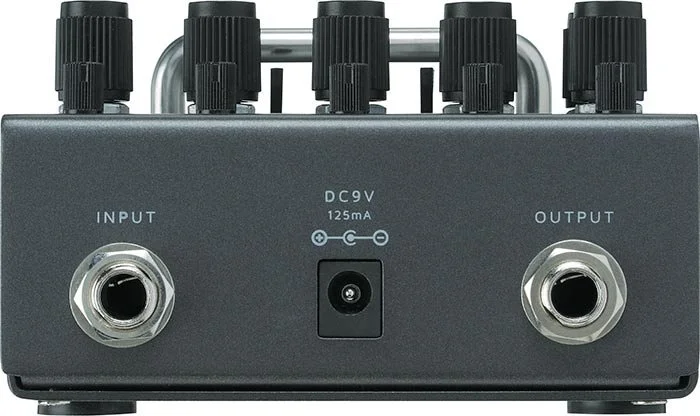 Image 2 of 5
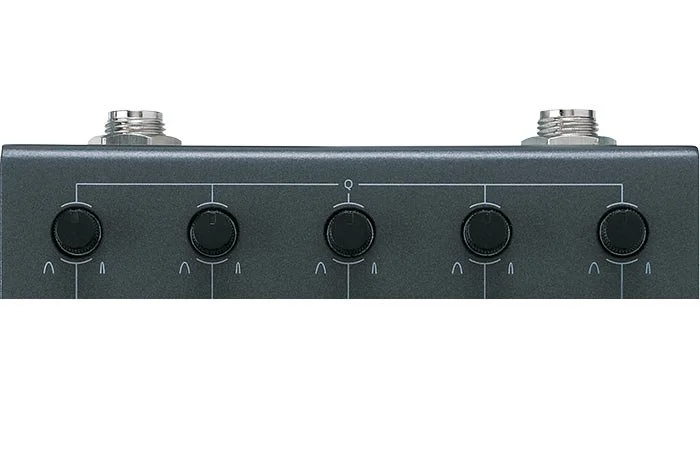 Image 3 of 5
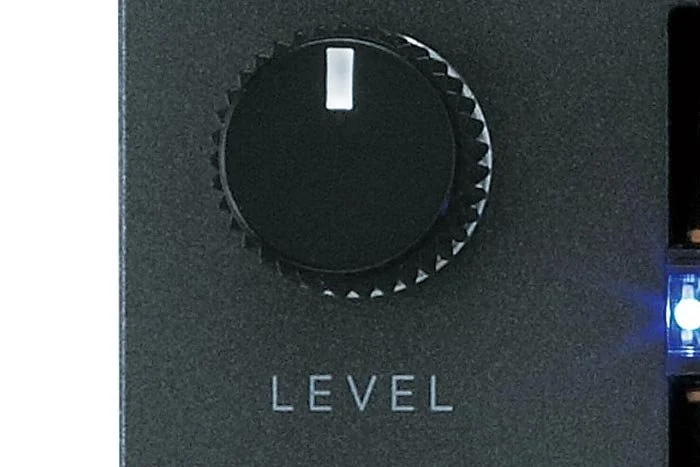 Image 4 of 5
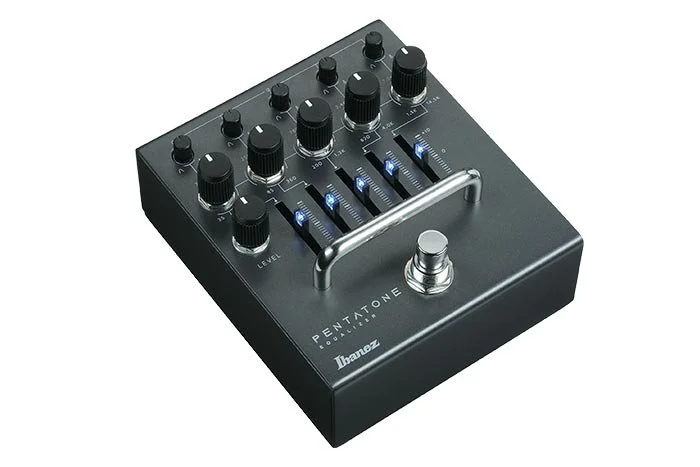 Image 5 of 5
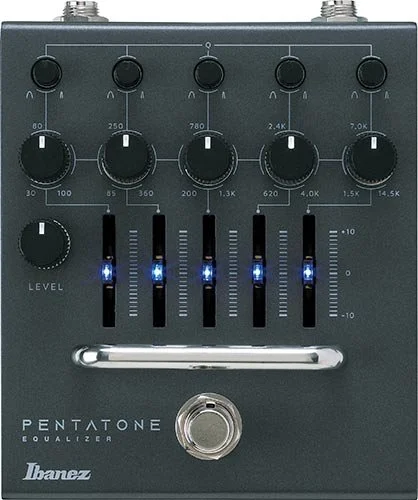
Pedal Type: Fully parametric 5-band equalizer
Frequency Range: 30 Hz to 14.5 kHz continuously variable across all five bands
Boost/Cut Range: ±10 dB level adjustment per band via LED-illuminated sliders
Controls: 5 frequency dials, 5 level sliders, 5 continuously variable Q controls, and 1 Master Level knob
Circuitry & Headroom: Pure analog signal path featuring an integrated internal ±9V dual-rail voltage conversion circuit
Hardware & Bypass: Heavy-duty compact steel enclosure with mechanical true bypass switching
I/O & Power Profile: 1/4-inch mono TS input, 1/4-inch mono TS output; runs on standard 9V DC or a single 9V battery drawing 125 mA
The core engineering of this unit elevates standard pedalboard equalization into full console-grade parametric control. Derived from the tone-sculpting assembly of the flagship preamp series, each of the five bands features a dedicated, continuously variable Q control. This lets audio engineers and musicians adjust the bandwidth filter shape seamlessly, dialing in ultra-narrow notch sweeps to eliminate precise problem resonant frequencies, or widening the curve for broad, musical tone shaping. The five level sliders feature integrated LED illumination, giving you instant visual feedback on your frequency curve under challenging stage lighting. Each band provides an expansive ±10 dB adjustment sweep, allowing for dramatic structural filtering or transparent frequency correction.
To handle high-amplitude instruments and hot line-level electronics without clipping or compressing the wave footprint, the internal circuit utilizes a specialized voltage doubler layout. While running on a standard external 9V supply, the internal network steps up the operational voltage rails to a balanced ±9V configuration. This massive increase in dynamic headroom allows the pedal to seamlessly accept high-output active electric bass guitars, multi-instrument keyboard rigs, and aggressive line signals without introducing unwanted clipping artifact or squashing transient detail. The pure analog engineering ensures that your base tone preserves its natural definition, warmth, and pick-attack dynamics from input to output.
This parametric equalizer acts as a versatile tone manager across multiple points in an active signal chain. Positioned directly before high-gain drive or fuzz units, the pedal operates as a precision pre-emphasis filter, tightening up flubby low-end transients or pushing specific upper-mid frequencies to alter the harmonic structure of the distortion circuit. Alternatively, when routed through the series effects loop of an instrument amplifier, the Master Level control—which sweeps from complete silence up to a clean +6 dB boost—turns the pedal into an adjustable solo boost or a final global wave-shaper. The mechanical true bypass switching layout completely separates the internal circuitry when disengaged, ensuring that long cable runs retain original top-end clarity without signal degradation.
To ensure optimal performance and protect the sensitive internal analog rail circuit, this unit must be powered exclusively by a high-quality, regulated 9V DC external adapter with a center-negative barrel plug (5.5mm x 2.1mm) or a single standard 9V battery. The circuit demands a continuous current draw of 125 mA at 9V DC. Exceeding the specified voltage threshold or utilizing AC-output power supplies will cause immediate damage to the internal voltage doubler components, voiding the factory warranty. Always disconnect the input jack when storing the pedal on battery power to prevent unnecessary drain on the internal battery circuit.
Pedal Type: Fully parametric 5-band equalizer
Frequency Range: 30 Hz to 14.5 kHz continuously variable across all five bands
Boost/Cut Range: ±10 dB level adjustment per band via LED-illuminated sliders
Controls: 5 frequency dials, 5 level sliders, 5 continuously variable Q controls, and 1 Master Level knob
Circuitry & Headroom: Pure analog signal path featuring an integrated internal ±9V dual-rail voltage conversion circuit
Hardware & Bypass: Heavy-duty compact steel enclosure with mechanical true bypass switching
I/O & Power Profile: 1/4-inch mono TS input, 1/4-inch mono TS output; runs on standard 9V DC or a single 9V battery drawing 125 mA
The core engineering of this unit elevates standard pedalboard equalization into full console-grade parametric control. Derived from the tone-sculpting assembly of the flagship preamp series, each of the five bands features a dedicated, continuously variable Q control. This lets audio engineers and musicians adjust the bandwidth filter shape seamlessly, dialing in ultra-narrow notch sweeps to eliminate precise problem resonant frequencies, or widening the curve for broad, musical tone shaping. The five level sliders feature integrated LED illumination, giving you instant visual feedback on your frequency curve under challenging stage lighting. Each band provides an expansive ±10 dB adjustment sweep, allowing for dramatic structural filtering or transparent frequency correction.
To handle high-amplitude instruments and hot line-level electronics without clipping or compressing the wave footprint, the internal circuit utilizes a specialized voltage doubler layout. While running on a standard external 9V supply, the internal network steps up the operational voltage rails to a balanced ±9V configuration. This massive increase in dynamic headroom allows the pedal to seamlessly accept high-output active electric bass guitars, multi-instrument keyboard rigs, and aggressive line signals without introducing unwanted clipping artifact or squashing transient detail. The pure analog engineering ensures that your base tone preserves its natural definition, warmth, and pick-attack dynamics from input to output.
This parametric equalizer acts as a versatile tone manager across multiple points in an active signal chain. Positioned directly before high-gain drive or fuzz units, the pedal operates as a precision pre-emphasis filter, tightening up flubby low-end transients or pushing specific upper-mid frequencies to alter the harmonic structure of the distortion circuit. Alternatively, when routed through the series effects loop of an instrument amplifier, the Master Level control—which sweeps from complete silence up to a clean +6 dB boost—turns the pedal into an adjustable solo boost or a final global wave-shaper. The mechanical true bypass switching layout completely separates the internal circuitry when disengaged, ensuring that long cable runs retain original top-end clarity without signal degradation.
To ensure optimal performance and protect the sensitive internal analog rail circuit, this unit must be powered exclusively by a high-quality, regulated 9V DC external adapter with a center-negative barrel plug (5.5mm x 2.1mm) or a single standard 9V battery. The circuit demands a continuous current draw of 125 mA at 9V DC. Exceeding the specified voltage threshold or utilizing AC-output power supplies will cause immediate damage to the internal voltage doubler components, voiding the factory warranty. Always disconnect the input jack when storing the pedal on battery power to prevent unnecessary drain on the internal battery circuit.