 Image 1 of 2
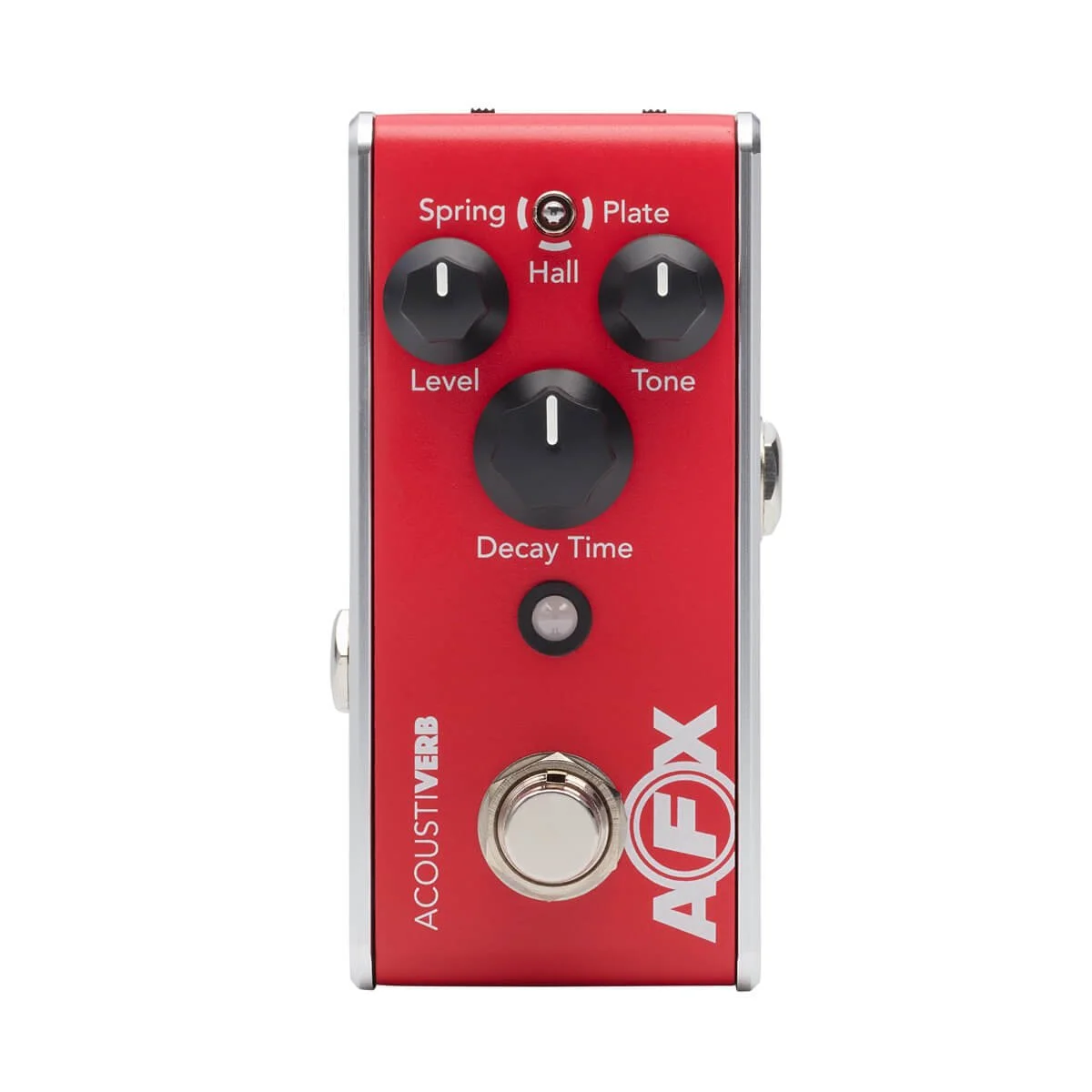 Image 2 of 2
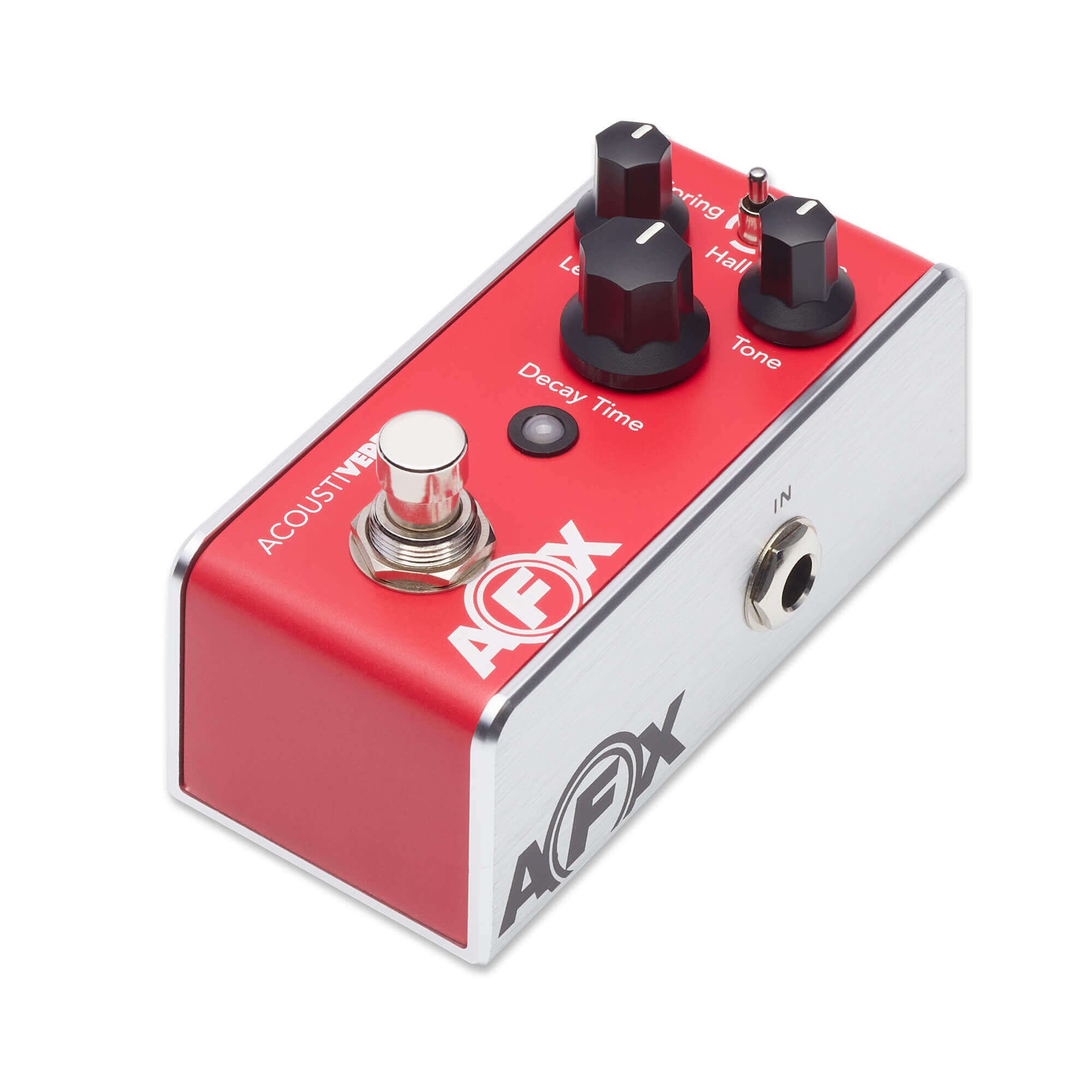
Fishman AFX AcoustiVerb
Pedal Type: Mini Digital Acoustic Reverb
Controls: Decay Time, Level, Tone, 3-Way Reverb Switch (Spring/Hall/Plate), Audio Path Slide Switch (Tip/Ring), True/Buffered Bypass Slide Switch, Engage Footswitch
Bypass Layout: Switchable True Bypass or Buffered Bypass with Programmable Reverb Spillover
Power Requirements: 9VDC Negative Center Only (Do Not Exceed)
Current Draw: 53 mA
Dimensions: 1.9” W x 3.8” D x 1.92” H (49 mm W x 97 mm D x 49 mm H)
Acoustic-Voiced Ambience and Parallel Mixing Architecture
Ultra-High Headroom Conversion and Studio-Grade Algorithms
The Fishman AFX AcoustiVerb provides spatial expansion specifically calibrated for the delicate harmonic properties and wide frequency ranges of acoustic-electric instruments. Operating with an expansive 100dB dynamic range, the internal architecture converts input audio at 24-bit resolution and processes information via a high-headroom 32-bit digital signal processing engine. This pristine digital environment hosts three independent reverberation algorithms: a spring model that captures vintage mechanical tank properties, an expansive room-mode hall model designed for deep atmospheric space, and a high-density studio plate model characterized by tight early reflections and bright metallic finishes.
Parallel Wet Path Isolation and Frequency Tuning
To guarantee that your original acoustic performance profile remains uncompromised, the pedal utilizes a hardwired analog direct path. Rather than digitizing and processing your entire audio stream, the direct instrument line passes from input to output completely untouched, with selected reverb tails blended in parallel beside your raw transducer tone. The Level knob adjusts the volume of this wet processing path without introducing systemic compression or level drop to your fundamental signal. Furthermore, the onboard Tone control acts exclusively upon the wet reverberation tail, letting you sculpt bright ambient washes or dark reflections without shifting the native treble response of your guitar.
Creative Rig Integration and Circuit Optimization
Stereo Component Isolation and Dual Effects Chaining
To configure a dual-source guitar rig using a stereo multi-sensor system, utilize standard TRS 1/4-inch instrumentation cables to hook up the AcoustiVerb. Sliding the top-mounted Audio Path micro-switch to the Ring orientation isolates the internal DSP to act solely upon the auxiliary pickup or internal microphone line. Simultaneously, the primary magnetic or piezo pickup on the Tip line passes through the chassis without processing, allowing you to feed a clean rhythm signal down one side of a dual-channel preamplifier while bathing the microphone source in a cavernous hall landscape.
Seamless Ambient Transits and Buffered Level Conditioning
For complex solo looping sets that demand smooth transitions when disengaging effects blocks, adjust the mechanical bypass hardware to target the internal buffer circuit. The high-impedance 10M Ohm input buffer conditions your pickup lines against long cable runs while isolating the output from click noise. To prevent abrupt sonic drops when clicking the pedal off, power up the pedal while keeping the main footswitch depressed to toggle the proprietary Spillover mode. Once armed, bypassing the pedal allows trailing ambient decays to naturally dissolve into silence while your real-time direct playing remains present in the live venue mix.
POWER AND OPERATIONAL REQUIREMENTS: RUNS SOLELY ON OUTBOARD FILTERED AND REGULATED 9VDC CURRENT REGULATED THROUGH A COMPATIBLE 2.1MM BARREL PLUG CONFIGURED REVERSE POLARITY (CENTER NEGATIVE). DAMAGE INCURRED FROM APPLYING OVER-VOLTAGE OR ALTERNATING CURRENT (AC) INFRASTRUCTURE WILL VOID THE MANUFACTURER WARRANTY ENTITLEMENT. TO PREVENT ELECTRONIC ARCING, SIGNAL DEGRADATION, OR IRREPARABLE COMPONENT DAMAGE, CHASSIS ENCLOSURE SITES MUST NOT BE EXPOSED TO FLUID ABSORPTION, HIGH AIR MOISTURE LEVELS, INCLEMENT WEATHER CONDITIONS, OR EXTREME THERMAL IMPACTS.
Pedal Type: Mini Digital Acoustic Reverb
Controls: Decay Time, Level, Tone, 3-Way Reverb Switch (Spring/Hall/Plate), Audio Path Slide Switch (Tip/Ring), True/Buffered Bypass Slide Switch, Engage Footswitch
Bypass Layout: Switchable True Bypass or Buffered Bypass with Programmable Reverb Spillover
Power Requirements: 9VDC Negative Center Only (Do Not Exceed)
Current Draw: 53 mA
Dimensions: 1.9” W x 3.8” D x 1.92” H (49 mm W x 97 mm D x 49 mm H)
Acoustic-Voiced Ambience and Parallel Mixing Architecture
Ultra-High Headroom Conversion and Studio-Grade Algorithms
The Fishman AFX AcoustiVerb provides spatial expansion specifically calibrated for the delicate harmonic properties and wide frequency ranges of acoustic-electric instruments. Operating with an expansive 100dB dynamic range, the internal architecture converts input audio at 24-bit resolution and processes information via a high-headroom 32-bit digital signal processing engine. This pristine digital environment hosts three independent reverberation algorithms: a spring model that captures vintage mechanical tank properties, an expansive room-mode hall model designed for deep atmospheric space, and a high-density studio plate model characterized by tight early reflections and bright metallic finishes.
Parallel Wet Path Isolation and Frequency Tuning
To guarantee that your original acoustic performance profile remains uncompromised, the pedal utilizes a hardwired analog direct path. Rather than digitizing and processing your entire audio stream, the direct instrument line passes from input to output completely untouched, with selected reverb tails blended in parallel beside your raw transducer tone. The Level knob adjusts the volume of this wet processing path without introducing systemic compression or level drop to your fundamental signal. Furthermore, the onboard Tone control acts exclusively upon the wet reverberation tail, letting you sculpt bright ambient washes or dark reflections without shifting the native treble response of your guitar.
Creative Rig Integration and Circuit Optimization
Stereo Component Isolation and Dual Effects Chaining
To configure a dual-source guitar rig using a stereo multi-sensor system, utilize standard TRS 1/4-inch instrumentation cables to hook up the AcoustiVerb. Sliding the top-mounted Audio Path micro-switch to the Ring orientation isolates the internal DSP to act solely upon the auxiliary pickup or internal microphone line. Simultaneously, the primary magnetic or piezo pickup on the Tip line passes through the chassis without processing, allowing you to feed a clean rhythm signal down one side of a dual-channel preamplifier while bathing the microphone source in a cavernous hall landscape.
Seamless Ambient Transits and Buffered Level Conditioning
For complex solo looping sets that demand smooth transitions when disengaging effects blocks, adjust the mechanical bypass hardware to target the internal buffer circuit. The high-impedance 10M Ohm input buffer conditions your pickup lines against long cable runs while isolating the output from click noise. To prevent abrupt sonic drops when clicking the pedal off, power up the pedal while keeping the main footswitch depressed to toggle the proprietary Spillover mode. Once armed, bypassing the pedal allows trailing ambient decays to naturally dissolve into silence while your real-time direct playing remains present in the live venue mix.
POWER AND OPERATIONAL REQUIREMENTS: RUNS SOLELY ON OUTBOARD FILTERED AND REGULATED 9VDC CURRENT REGULATED THROUGH A COMPATIBLE 2.1MM BARREL PLUG CONFIGURED REVERSE POLARITY (CENTER NEGATIVE). DAMAGE INCURRED FROM APPLYING OVER-VOLTAGE OR ALTERNATING CURRENT (AC) INFRASTRUCTURE WILL VOID THE MANUFACTURER WARRANTY ENTITLEMENT. TO PREVENT ELECTRONIC ARCING, SIGNAL DEGRADATION, OR IRREPARABLE COMPONENT DAMAGE, CHASSIS ENCLOSURE SITES MUST NOT BE EXPOSED TO FLUID ABSORPTION, HIGH AIR MOISTURE LEVELS, INCLEMENT WEATHER CONDITIONS, OR EXTREME THERMAL IMPACTS.